The right insulation makes your home warmer, quieter, and cheaper to run
Most homes in the UK lose a significant amount of heat through their walls, roof, and floors. The right insulation stops that, but the approach depends entirely on how your home is built, its current condition, and what else you are planning to do.
Why insulation matters
Most homes lose heat through walls, roofs, and floors, often without the homeowner realising. Poorly insulated homes work harder to stay warm, driving up energy bills and leaving cold spots that no amount of extra heating will fix.
The first thing homeowners tend to notice after insulating is not lower bills (Although that's a great bonus). It is comfort. Rooms that were always cold become usable. The house holds heat for longer, and the heating system does not have to work as hard.
Types of insulation
The right type of insulation depends on your home's construction, its current condition, and what you're trying to achieve. Here's how the main options compare.
How it works | Disruption | Best suited for | |
|---|---|---|---|
| Cavity wall (CWI) | Fills the gap between inner and outer walls | Low | Homes with unfilled cavities or failed cavity insulation |
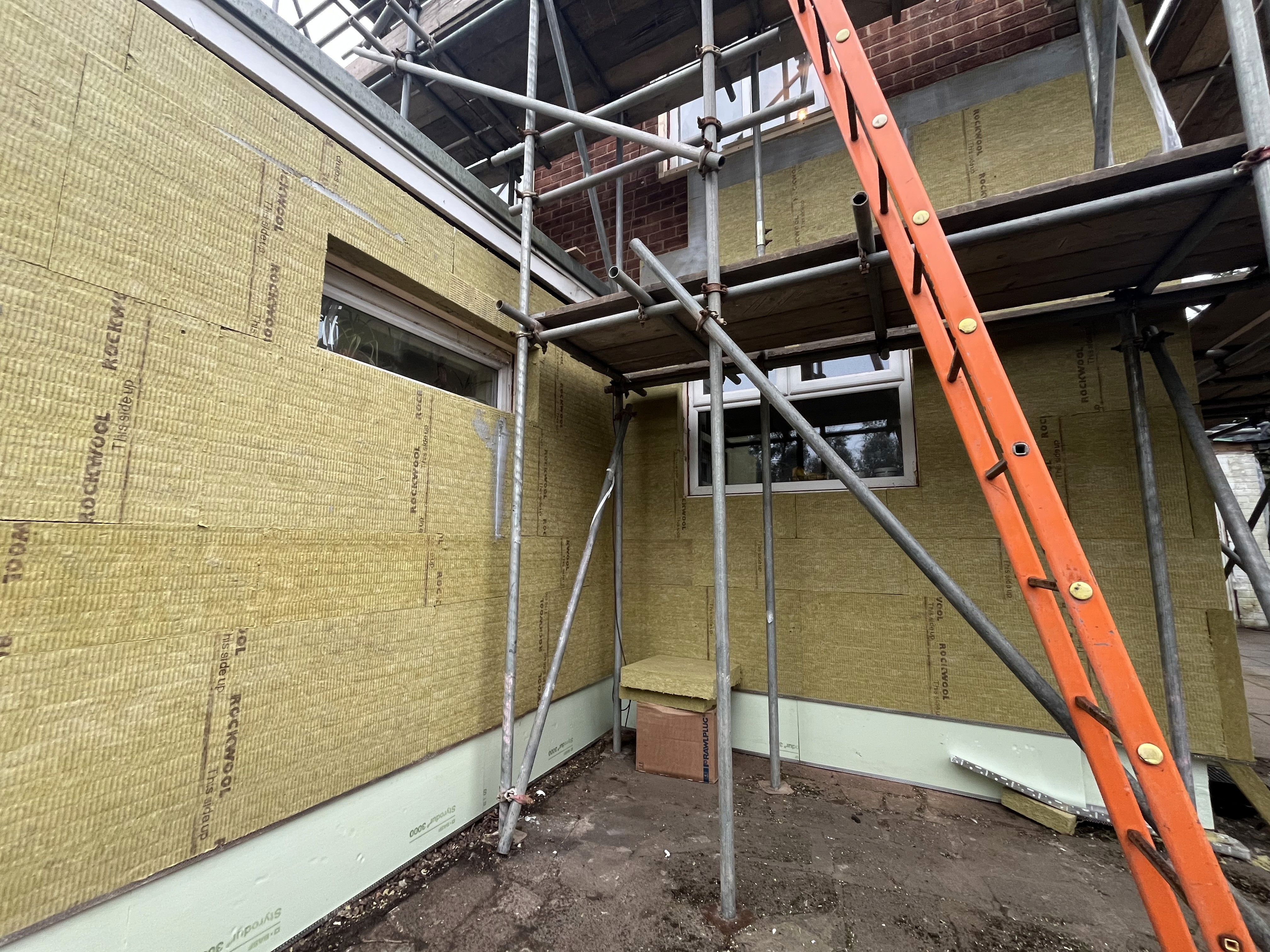
| External wall (EWI) | Adds insulation to the outside of the building | Medium | Solid-wall homes where external changes are viable |
| Internal wall (IWI) | Adds insulation to the inside face of external walls | High | Solid walls where EWI is not possible, or during renovation |
| Loft | Laid between and over joists in the loft space | Low | Any home with accessible loft space |
| Room-in-roof | Insulates between rafters in a converted loft | High | Top-floor rooms built into the roof, or loft conversions |
| Flat roof | Insulation added above or below the roof deck | Medium to high | Older flat roofs, especially during replacement or repair |
| Floor | Insulates beneath ground-floor suspended or solid floors | Medium to high | Draughty suspended floors, or solid floors being replaced |
What to be aware of
Insulation changes how moisture moves through your home. If there are existing damp or condensation problems, adding insulation without addressing them first can make things worse, not better. Material choice matters too. Older solid-walled homes need breathable materials that allow moisture to pass through the wall rather than trapping it inside.
Sequencing is just as important. Insulating before fixing the roof, resolving damp, or planning your ventilation can create problems that are costly to undo later. The order in which improvements happen is not an afterthought.
“You can’t ignore damp and just install insulation. It won’t solve the issue and it could also make it worse.”
Adam Wilson, Head of Delivery at Furbnow

How Furbnow approaches insulation
Every home is different, so we start with a whole-house survey to understand your home's construction, its current condition, and where the biggest heat losses are. Our PAS2035-certified retrofit coordinators and CIAT-chartered architectural technologists design an insulation strategy built around your specific home, including the right materials, the correct sequencing, and how it fits alongside ventilation and heating.
We do not recommend insulation in isolation. Everything is designed together so that improvements reinforce each other rather than create new problems.
Start with a plan, not a guess
At Furbnow, we map your home’s heat loss, identify the right insulation measures, and set out the correct order of improvements, so nothing gets installed at the wrong time. Book a call to talk through your situation and find out how we can help.
Frequently asked questions
Does my home need insulation?
Will insulation cause damp or mould?
How long does insulation last?
Do I need to move out during the work?
Should I insulate before or after installing a heat pump?
0330 165 6147
AWARDS & RECOGNITION