
Underfloor heating: Even warmth, without a radiator in sight
Underfloor heating warms a room from beneath the floor, replacing radiators with an even, consistent heat. Retrofitting it into an existing home takes more planning than a new build - your floor construction, insulation, and heating system all need to work together. Done well, it's one of the most comfortable and efficient ways to heat a home - particularly in well-insulated properties.
Why consider underfloor heating?
Radiators tend to create hotter areas near the unit and cooler patches elsewhere. Underfloor heating runs at lower temperatures across the whole floor surface, producing a steady warmth that most homeowners find noticeably more comfortable.
This is especially relevant if you are considering a heat pump. Heat pumps operate at lower flow temperatures than boilers, around 35 to 45°C compared to 60 to 75°C for a boiler, so they need emitters with a larger surface area to deliver enough warmth. Underfloor heating uses the entire floor, giving it a much larger surface area than radiators, which is why the two work so well together. And without radiators on the walls, you free up usable space in every room.
Types of underfloor heating
Wet (water-based) | Dry (electric) | |
|---|---|---|
| How it works | Warm water flows through pipes embedded in or beneath the floor | Electric heating elements or mats installed under floor surface |
| Connected to | Your central heating system (boiler or heat pump) | The electrical supply |
| Running cost | Lower: uses your heating system | Higher: runs directly on electricity |
| Install disruption | Higher: requires floor buildup or excavation | Lower: thin mats laid beneath flooring |
| Best suited for | Whole-house heating, especially with heat pumps | Individual rooms, bathrooms or where floor buildup is limited |
The right system depends on your floor construction, budget, and how much disruption you're prepared for.
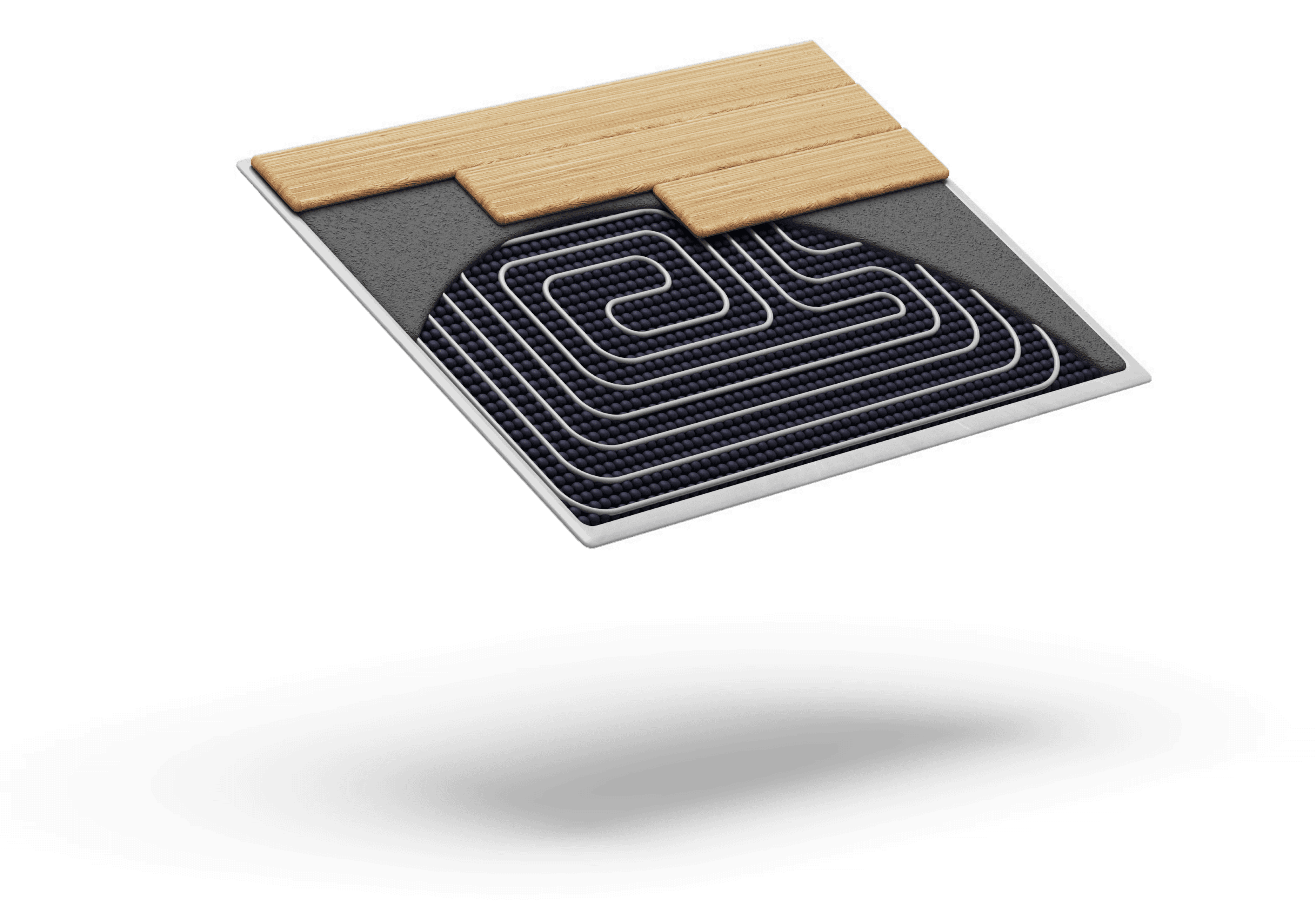
Most homeowners opt for a wet system. It circulates warm water through pipes at low temperatures, and the floor acts as a thermal mass, absorbing and releasing heat slowly. There are a few ways to install one, depending on your floor construction.
Overlay boards sit on top of the existing floor with pipes in channels. This is the quickest retrofit option, but it raises the floor height by 15 to 25mm.
Routed panels use insulated boards with pre-cut grooves for the pipes, giving a flush finish without much height gain.
Between-joist installation fits pipes and insulation between suspended timber floor joists, which avoids raising the floor at all.
"Underfloor heating works at low flow temperatures, delivering consistent comfort and pairing particularly well with heat pumps in well-insulated homes."
Adam Wilson, Head of Delivery at Furbnow

What to be aware of
Underfloor heating heats up slowly. Underfloor heating warms the floor mass rather than the air directly, so it responds more slowly than radiators. It works best left on for longer periods at a steady temperature, rather than turned on and off throughout the day.
Insulation matters as much as the heating. If your floors are poorly insulated, underfloor heating won't perform well regardless of the system you choose. In many retrofits, adding or upgrading floor insulation is a necessary part of the project - not an optional extra in most retrofit scenarios.
Disruption is significant. Retrofitting underfloor heating into an existing home is more involved than a new build installation. Floors need to come up, and furniture or kitchen cabinets may need to move out. If a wet screed is used, drying time alone can take several weeks, and doors or skirting boards may need trimming to accommodate the floor height increase. All of this adds labour cost that's often underestimated at the outset.
Plan for the heating system you'll have, not just the one you have now. If there's any chance you'll switch to a heat pump in the coming years, it's worth designing the underfloor system with that in mind from the start. Pipe spacing and system design should be based on low flow temperatures suitable for a heat pump. Designing around a high-temperature boiler system can lead to poor performance or costly changes later.
Cost depends on the scope of the work. A wet underfloor heating system typically starts from around £8,000 to £10,000 for a retrofit, but can increase significantly depending on floor area, system type, and preparation work required. Labour is usually the biggest variable.
How Furbnow approaches underfloor heating
Underfloor heating needs to be designed as part of a wider heating strategy. How well it performs depends on your insulation, your heat source, and the way your home loses and retains heat overall. Furbnow’s retrofit coordinators assess all of this together, so the system is designed to work with any other upgrades you make.
We model the costs, returns, and sequencing for every relevant measure - including whether underfloor heating is the right emitter for your property and heating setup. Book a free call to talk through your situation and find out how we can help.
Frequently asked questions
How long does installation take?
Can I stay in my house during the work?
Does underfloor heating work with my existing boiler?
Is underfloor heating suitable for every home?
0330 165 6147
AWARDS & RECOGNITION