
Generate your own electricity
with solar panels and battery storage
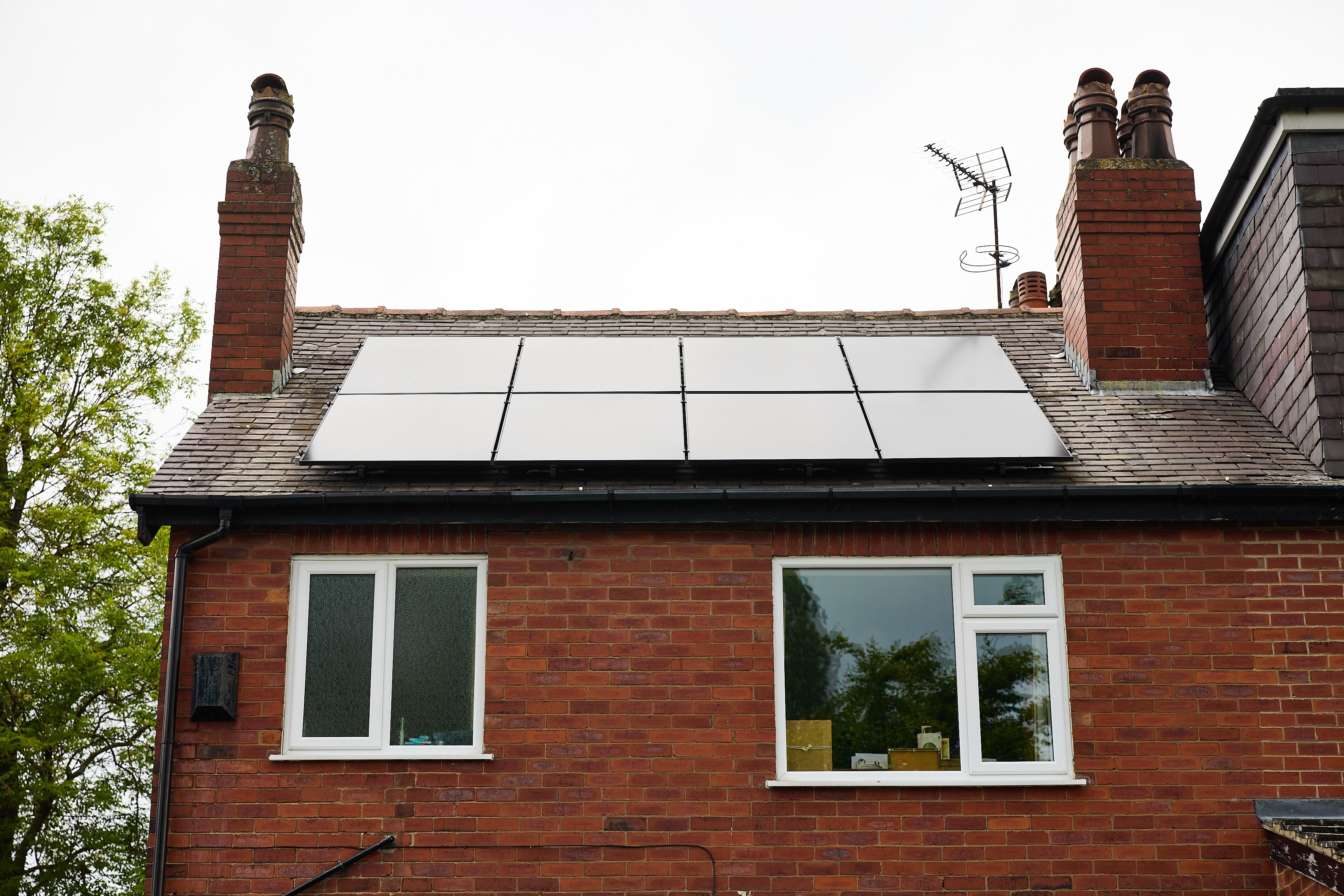
Solar panels generate electricity from sunlight, reducing how much you buy from the grid. They pair well with heat pumps and electric vehicles, and adding battery storage lets you use more of what you generate.
Why consider solar panels?
Solar panels let you generate your own electricity, offsetting a significant portion of your household demand. Once installed, the running costs are minimal and the panels themselves typically last 25 to 30 years.
If you're also considering a heat pump or an EV charger, solar becomes significantly more valuable. Both increase your electricity consumption, and generating some of that on-site means you're not simply shifting costs from gas to the grid. Adding battery storage lets you use more of what you generate, storing excess daytime energy for the evening when most households need it.
How solar panels work
Solar panels convert sunlight into electricity that powers your home directly. Any surplus is exported to the grid. How much they generate depends on your roof's orientation, pitch, and shading. A south-facing roof with minimal shading will produce the most, but east and west-facing roofs can still deliver a worthwhile return.
"A good roof-mounted solar design isn't just about how many panels you can fit. It’s also driven by your roof's orientation, pitch and shading."
Adam Wilson, Head of Delivery at Furbnow

Your options
The right setup depends on your roof, your energy use, and whether you want battery storage now or later.
Panels without a battery generate electricity during the day. Whatever you don’t use is exported to the grid, earning a small payment through the Smart Export Guarantee. This is the lower-cost option and suits households on a tighter budget or those not yet sure about storage.
Panels with a battery let you store excess electricity and use it in the evening and overnight, rather than buying from the grid. It costs more upfront, but the system is designed as one unit and runs more efficiently. If you have or are planning a heat pump or EV charger, a battery helps you get more from your panels when demand is highest.
If you already have panels and want to add a battery later, that’s possible. A battery can be fitted alongside your existing setup. It’s less efficient than having everything designed together from the start, but it avoids replacing what’s already there.
What to be aware of
A few things are worth understanding before you commit.
Your roof matters more than you might think. South-facing roofs at around 30 to 40 degrees pitch produce the highest annual output, but east-to-west setups are still viable and spread generation across more of the day. Shading from trees, chimneys, or nearby buildings affects performance more than most homeowners expect. The usable roof area - not total space - is what determines how many panels your property can fit (typically around 6 to 12 panels for most modern systems).
Payback depends on how much you use, not just how much you generate. A system costing around £6,000 that saves £400 to £600 per year in reduced bills and export payments would typically pay for itself in around 10 to 15 years, depending on usage and energy prices. After that, the remaining 15 to 20 years of panel life can almost be thought of as free electricity. But payback varies - it improves if energy prices rise or if you use more of your own generation directly rather than exporting it.
Battery sizing needs to match your actual usage. An oversized battery sits partially unused and reduces your financial return. The rule of thumb is to size storage around your evening and overnight demand - typically around 5 to 10 kilowatt hours for an average household, depending on evening usage patterns. If you have a heat pump or EV, you may need more.
Planning permission is rarely needed for domestic installations. Most domestic solar installations fall under permitted development. The main exceptions are listed buildings and properties in conservation areas, where you'll need to check with your local planning authority.
How Furbnow approaches solar
Solar works best when it’s designed alongside your other energy upgrades, not in isolation. How many panels you need and whether battery storage makes sense depend on your home’s insulation and heating setup, and where your energy demand is headed.
Furbnow’s retrofit coordinators assess the whole picture - so a solar system is designed to complement what’s already in place and what’s planned next. We model the costs, returns, and sequencing for every relevant measure, including whether solar is the right priority for your property right now. Book a free call to talk through your situation and find out how we can help.
Frequently asked questions
Do I need planning permission for solar panels?
How long does installation take?
Is my roof suitable for solar?
Can I add a battery later if I don't get one now?
How much maintenance do solar panels need?
0330 165 6147
AWARDS & RECOGNITION