
Heat pumps: Why you should consider them and when not to
A heat pump extracts warmth from the outside air or ground and uses it to heat your home, even in cold weather. Done properly, it is more efficient than a gas boiler, produces far less carbon, and delivers a steady comfortable heat.
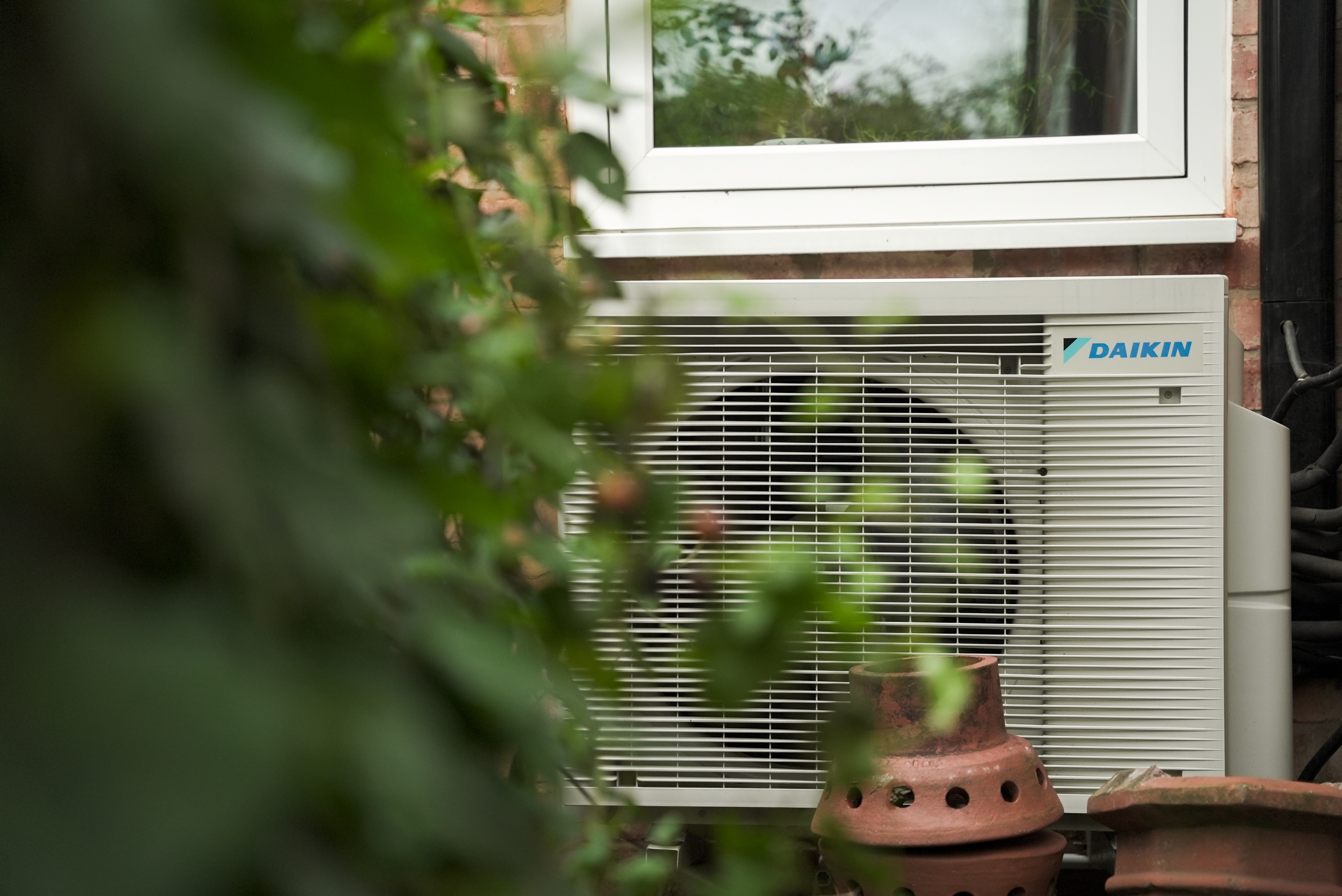
Why consider a heat pump?
A heat pump works a bit like a fridge in reverse. Even when it’s cold outside, there’s heat energy in the air and the ground. A refrigerant, a fluid that circulates through the system, absorbs that heat from the outside air or from underground loops depending on the type of system. A compressor then increases the temperature of that fluid, and the hot refrigerant flows inside the home, where it releases its heat - through radiators or underfloor heating in most systems, or as warm air blown directly into rooms with air-to-air units. The refrigerant cools down and heads back to repeat the cycle.
The electricity you pay for isn’t creating heat - it’s powering the system that moves existing heat into your home. That’s why a heat pump can deliver three to four units of heat for every one unit of electricity it uses.
On a dedicated heat pump electricity tariff, heating costs can drop to around five to six pence per kilowatt hour - lower than gas. Even on a standard tariff, running costs are broadly comparable to a gas boiler, provided the system is well designed.
Beyond running costs, there are several reasons homeowners are making the switch:
More consistent comfort. Unlike a gas boiler, which cycles on and off, a heat pump delivers a steady, even temperature throughout the day. Many homeowners find this noticeably more comfortable once they've experienced it.
Lower carbon emissions. A well-designed heat pump can cut your property's carbon emissions by around 70 to 75%.
Longer lifespan. Heat pumps typically last 20 to 25 years, compared to 12 to 15 for a gas boiler.
Government support. The Boiler Upgrade Scheme provides £7,500 towards installation, and heat pumps carry 0% VAT.
Future-proofing. Gas prices are rising faster than electricity, and government policy is moving away from gas boilers. Switching now avoids being caught out later.
Types of heat pump
There are three main types of heat pump. Air-to-water is by far the most common, used in around 95% of domestic installations.
Air-to-water | Air-to-air | Ground source | |
|---|---|---|---|
| How it works | Transfers heat from outdoor air to a wet heating system | Transfers heat from outdoor air to rooms via indoor units | Draws heat from the ground into a wet heating system |
| Efficiency | Produces 3-4x more heat than the electricity it uses | 3-5x the heat per unit of electricity | 4-5x the heat per unit of electricity |
| Hot water | Yes, integrated | Separate solution needed (e.g. hot water cylinder) | Yes, integrated |
| Cooling | Not standard | Yes, provides cooling in summer | Not standard |
| Best suited for | Most homes with existing radiators or underfloor heating | Homes with no wet heating system, flats, single rooms, loft or garden conversions | Larger properties with available land for ground works |
| Relative cost | Moderate (and eligible for £7,500 BUS grant) | Lower (but currently no BUS grant as of April 2026) | Significantly higher (and eligible for £7,500 BUS grant) |
Air-to-water systems come in two configurations: monoblock, where everything sits in the outdoor unit with water pipes running inside, and split systems, where the refrigerant circuit is divided between an outdoor and indoor unit. Your installer will recommend the right setup based on your property.
Air-to-water vs air-to-air: what is the difference?
Air-to-water heat pumps are the most common choice in the UK, particularly where an existing radiator system is already in place. They replace your boiler and connect to your existing radiators or underfloor heating, and they heat your hot water too.
Air-to-air heat pumps work differently. Rather than heating water and pushing it through radiators, they heat rooms directly through indoor wall units, similar to an air conditioning system but designed primarily to heat. They are well suited to flats, homes on storage heaters, or properties without existing pipework. Installation is typically simpler and cheaper, as there is no need for radiator upgrades, pipework changes, or a hot water cylinder. They also provide cooling in summer.
The main trade-off is that air-to-air systems do not heat your water, so you will need a separate solution for that, such as an immersion heater or a dedicated hot water heat pump.
What to be aware of
System design is what separates a heat pump that saves you money from one that costs more to run than gas. A well-designed system with weather compensation controls, properly insulated pipework, and correctly sized radiators will maintain its efficiency across the full heating season. A poorly designed one won't.
Your home's insulation levels also matter. Properties with significant unaddressed heat loss - uninsulated walls, minimal loft insulation, or single-glazed windows - will benefit from tackling those issues first. That doesn't mean your home needs to be perfectly insulated before a heat pump makes sense, but obvious gaps should be closed so the system isn't working harder than it needs to.
Space is another practical consideration. You'll need room for an outdoor unit and, in most cases, a hot water cylinder indoors. Room-by-room heat loss calculations are also needed to make sure the system and any radiator upgrades are sized correctly for your home. Planning permission is not normally required for air source heat pumps, but there are noise regulations around placement relative to neighbours, so positioning needs to be considered early.
“The difference between a badly installed system and a well-designed one is huge. It is the difference between heat pumps being more expensive than gas versus being significantly cheaper to run.”
Adam Wilson, Head of Delivery at Furbnow

How Furbnow approaches heat pumps
We assess your home as a whole before recommending a heat pump. That means understanding your current heat loss, insulation levels, and heating setup so the system is designed to perform well from day one. If there are insulation improvements worth doing first, we’ll flag those and help you get the sequencing right - so you’re not paying to heat a home that’s still losing energy through the walls or roof.
Book a free call to talk through your situation and find out how we can help.
Start with your home, not the heat pump
A Furbnow whole-home assessment and design will determine whether a heat pump is right for your home, what size system you need, and what other changes would help it run at its best.
Frequently asked questions
Will a heat pump work in cold weather?
Are heat pumps cheaper to run than gas?
Does my home need to be fully insulated first?
How much does a heat pump cost?
Is my home suitable for a heat pump?
Are heat pumps noisy?
0330 165 6147
AWARDS & RECOGNITION