Retrofit Assessors: What Do They Do?

Tom Woodward
In brief
A retrofit assessor visits your home and carries out a detailed survey of the building fabric, heating, ventilation, and overall condition. The assessment identifies where your home is losing energy, flags existing problems that need addressing, and provides the foundation for a retrofit plan tailored to your property and circumstances.
What a retrofit assessor actually does
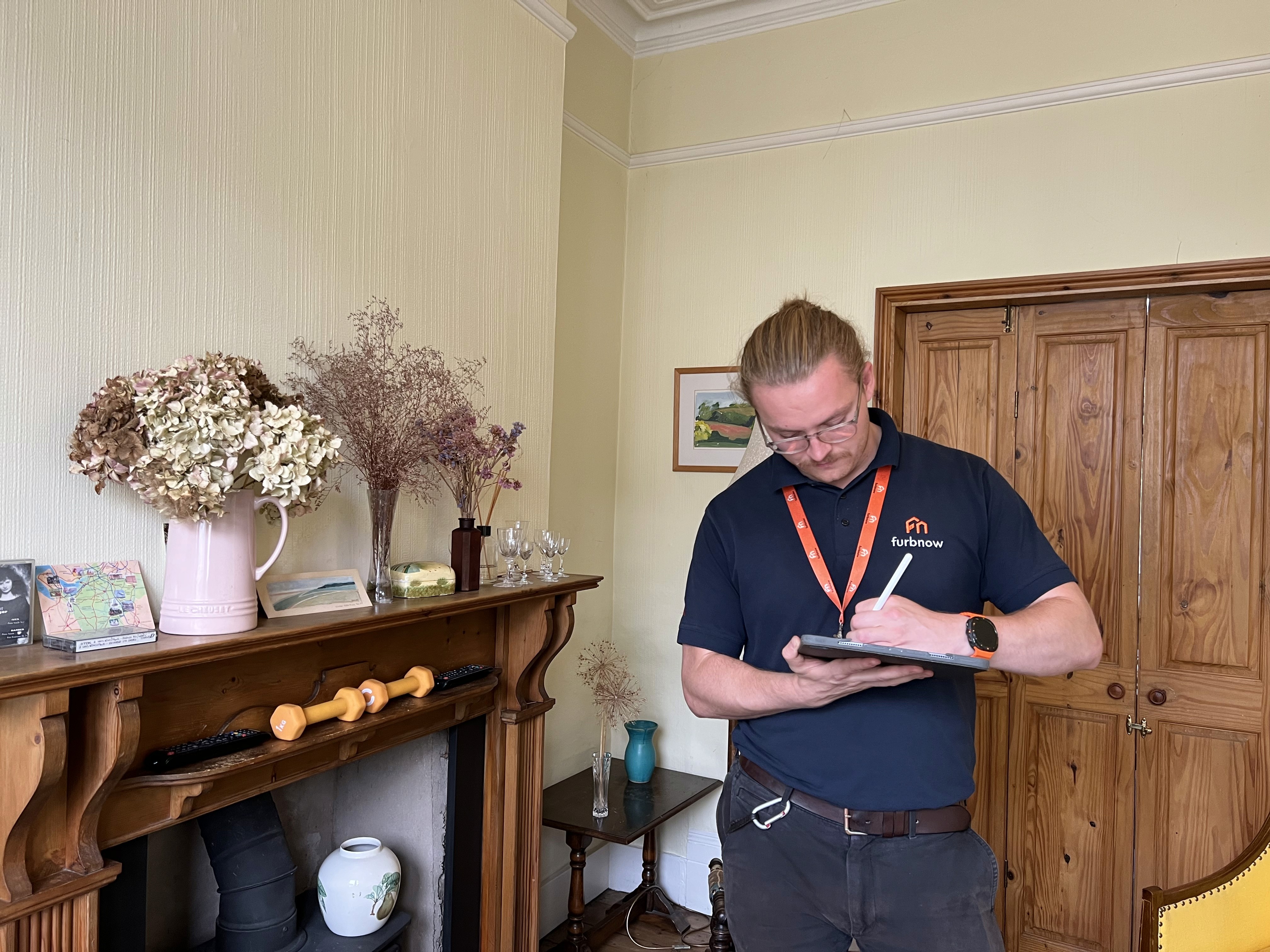
A retrofit assessor is the person who visits your home and evaluates how it’s performing. The assessment is a whole-house visual survey - systematic and detailed, covering the building fabric, insulation, glazing, heating systems, ventilation, and overall heat loss. The goal is to understand where the property is losing energy and what could realistically be done about it.
This is distinct from a retrofit coordinator, who takes the assessment findings and designs the retrofit plan. The coordinator decides which measures to recommend, in what order, and how different improvements interact with each other. They don’t typically visit the property, instead working from the data the assessor gathers. The two roles are deliberately separate so that the person inspecting the building isn’t the same person designing the solution.
My job as an assessor is to give the coordinator - and ultimately the homeowner - a clear, honest picture of what’s going on with the property. That means looking at the building itself, but also understanding the people living in it.
Starting with the homeowner, not the building
Before I even look at the property, I need to understand what’s driving the homeowner to act. The trigger is usually something specific. They may have moved into a new house and found the energy bills far higher than expected, or certain rooms are always cold and they can’t work out why. Sometimes they’re already planning an extension and want to make sure the existing parts of the house perform as well as the new section will.
The first conversation is about understanding their situation - the problem they’re trying to solve, their budget and timeline, how long they plan to stay, and whether comfort or adding value to the property is the priority. I also need to know whether they have a budget for a whole-house plan or can only afford one or two improvements right now.
Everyone’s circumstances are different, and those circumstances shape what’s realistic. There’s no point recommending a comprehensive retrofit to someone who’s planning to move in two years, and there’s no point suggesting one improvement at a time to someone who wants to do everything while they’re already renovating. The assessment has to be grounded in the homeowner’s priorities, not just what the building needs in theory.
What I look for when I walk in
Once I’m in the property, I’m assessing the building itself - wall thickness and construction type, signs of mould and damp, and the general state of the house, which tells me how it’s been maintained over the years.
The exterior matters as much as the interior. I’m looking at whether the pointing has been maintained, whether there’s evidence of water ingress, and whether timbers or windows are deteriorating. The outside of a building often reveals problems that aren’t immediately visible inside.
The assessment covers the building fabric comprehensively - insulation levels, glazing, heating systems, ventilation - but it’s primarily a visual survey. Non-invasive by default, it means I’m reading the building through what I can see and measure without opening up walls or floors. In some cases, where there’s a specific reason to check what’s inside a wall cavity, a borescope (a small camera on a flexible tube) can be used through a drill hole, but that’s not standard practice.
Properties were designed to breathe - they weren’t built for the weather we now experience, and that changes how you need to think about insulation.
Red flags and warning signs
Experience teaches you to read a property quickly. There’s sometimes an initial gut feeling when you walk into a home that it hasn’t been properly looked after, and the details confirm it.
Mould and damp are the most obvious red flags, along with staining on walls and ceilings and wear beyond what you’d expect for the age of the building. On the exterior, I’m looking for pointing that hasn’t been maintained and evidence of water getting in where it shouldn’t.
Then there are the signs of previous work that’s caused problems rather than solving them. I’ve walked into properties where cement render - a hard, non-breathable coating - has been applied to an old building that needs to breathe, or spray foam used on a floor where there’s a moisture issue underneath. Sometimes it’s as simple as cupboards pushed against exterior walls, trapping moisture behind them. These are all indicators that someone has tried to improve the building without understanding how it works as a system.
The reasons behind the neglect vary. Sometimes it’s a lack of budget. Sometimes circumstances have changed and the homeowner hasn’t been able to afford upkeep. Sometimes they simply don’t understand the principles - that buildings need ventilation, that cooking without extraction or showering without opening a window creates moisture problems over time. None of this is about blame. It’s about understanding the current state of the property so the plan starts from reality, not assumptions.
Understanding how the household lives
A retrofit assessment isn’t just about the physical building. How a household uses the property has a direct impact on how it performs and what needs to change.
Ventilation is the most common issue. Properties need fresh air. They were designed to breathe, to be open. Older buildings in particular weren’t built for the weather patterns we now experience - hot summers, cold and wet winters. When you start improving the airtightness of a building through insulation and draught-proofing, you need to make sure adequate ventilation is maintained. Otherwise, you trap moisture and create the exact problems you were trying to avoid.
I look at whether trickle vents are being used, whether there’s extraction in kitchens and bathrooms, whether the household has habits that contribute to moisture buildup. I’ve been in homes where the homeowner tells me they’re cold, and the thermostat is set to 15 degrees. Guidelines suggest heating to at least 18 degrees. It will cost more, and that’s a genuinely difficult conversation when someone is on a tight budget. You want to be respectful of their ability to afford to heat their home. But the reality is that properties do need heating and ventilating properly to function well.
This balance - between what the building technically needs and what the homeowner can realistically do - is one of the harder parts of the role. A careful conversation has to be had, and it looks different for every household.
Why more insulation isn’t always the answer
One of the things I find myself explaining regularly is that insulation alone doesn’t solve every problem. There’s a temptation to think that if a house is cold or expensive to heat, the answer must be to add more insulation. Sometimes that’s right. But sometimes the issue is ventilation, or how the building is being used, or previous work that’s introduced problems.
I’ve seen properties where the most effective intervention isn’t a new product or material at all. It’s opening trickle vents. It’s using extraction when cooking. It’s adjusting the thermostat to an appropriate temperature. Customers need to understand that it’s not always about adding more - sometimes changing habits is more important than changing the building.
The assessment is where all of this comes together. It’s about understanding the whole picture - the physical building, the way people live in it, and what’s realistically achievable given their budget and priorities. That picture is what the retrofit coordinator then uses to design a plan that actually works.
How the assessment feeds into a plan
Everything gathered during the assessment becomes the foundation for a retrofit plan. At Furbnow, the assessment findings go to a retrofit coordinator who uses them to build a plan of energy efficiency upgrades for the home - modelling costs for each recommended measure, projected energy savings, and a recommended sequence for the work based on the homeowner’s goals and budget.
The assessment doesn’t end with a list of everything that’s wrong. It produces a clear starting point for decisions: what to prioritise, what to phase, and what order to do things in so that each improvement supports the next rather than undermining it.
If you’re wondering what a retrofit assessment would reveal about your own home, a good first step is talking through your situation with someone who can help you work out whether a full assessment makes sense.
Book a free call to talk through your situation and find out how Furbnow can help.
0330 165 6147
AWARDS & RECOGNITION