Internal vs External Wall Insulation: Which Is Right for You?

Adam Wilson
In brief
If you have solid walls, you need to insulate them from one side or the other - internally or externally. Both work. Both can be done safely when properly designed. The right choice depends on your property, your budget, and what you are planning to do with the house.
The myth that external is always better
There is a common understanding in the retrofit world that external wall insulation (EWI) should always be preferred over internal (IWI). It is not true. If you design internal wall insulation properly and it is installed correctly, you can still achieve the same thermal benefits as EWI. Likewise, EWI is just as risky as IWI if it isn’t properly designed or installed. The key is making sure the full fabric is covered - going into floor spaces, making sure your roof and floor junctions are done properly, and ensuring any existing defects are rectified prior to installation.
Both approaches can be done at relatively low risk as long as they are properly designed and thought out. The choice between them comes down to a few practical factors.
What makes them different in practice
Internal wall insulation costs are similar to external, but the process is more disruptive. You need to remove all fixtures, fittings, skirting boards, plumbing, electrics, cornicing - everything that is attached to the walls being insulated. There is a lot more that goes into the post-installation phase: replastering, refitting, decorating. The upside is that you can do it in phases - room by room over a period of time - which helps if your budget does not stretch to doing the entire house at once. For a full detached property, you might be looking at around £35,000 to £40,000.
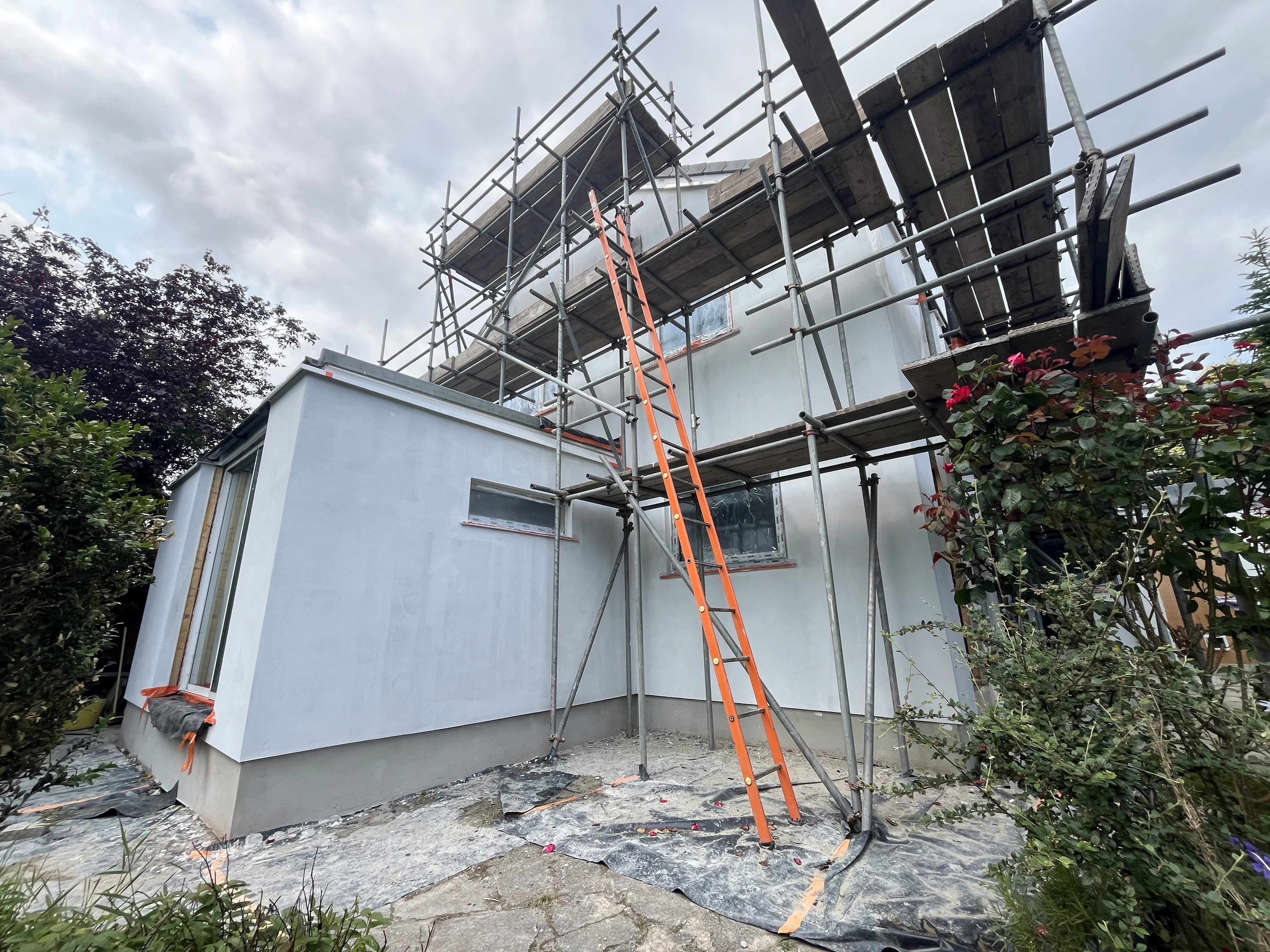
External wall insulation is more straightforward in the sense that it is scaffolding up, removing render if needed, fitting insulation boards, and re-rendering. There is less to do after the insulation is applied. Services like plumbing and electrics still need to be temporarily removed to avoid thermal bridges, but there is less disruption to the inside of the home. The trade-off is that it changes the external appearance of the property, which can require planning permission - even outside conservation areas, some local authorities require it if you are changing the external appearance.
If you design internal wall insulation properly and it is installed correctly, you can still achieve the same thermal benefits as EWI - and EWI is just as risky as IWI if it isn’t properly designed or installed.
When one makes more sense than the other
If you are already planning a renovation - stripping internal plaster, taking out a kitchen or bathroom - that is a natural opportunity for internal wall insulation. If your render is failing externally and needs replacing anyway, that is an opportunity for external.
Conservation areas can make external wall insulation tricky. And even outside conservation areas, there are sometimes local constraints on changing the external appearance. On the other hand, if space is tight internally, external insulation avoids the room size reduction that comes with adding 100mm or more to your internal walls.
Cost-wise, they can work out similarly. It really depends on the complexity and size of the property itself.
Materials matter either way
Solid walls need breathable insulation materials - wood fibre, mineral wool, hemp - to avoid trapping moisture inside the wall and causing damp. You cannot just put any material on any wall. You have to determine what the construction of the wall is before you do anything.
For cavity walls, there is more flexibility. The wall is designed for non-breathable materials, so insulated plasterboard internally or EPS board externally can both work. But the principle is the same: assess the construction first, then choose the material.
What to do next
If you are weighing up internal versus external wall insulation and not sure which makes sense for your home, book a free call to talk through your situation. We can help you understand the trade-offs and work out the right next step.
0330 165 6147
AWARDS & RECOGNITION